The Playbook: How I Use AI to Make F-You Money as a Content Creator
Nyaradzo
August 11, 2026

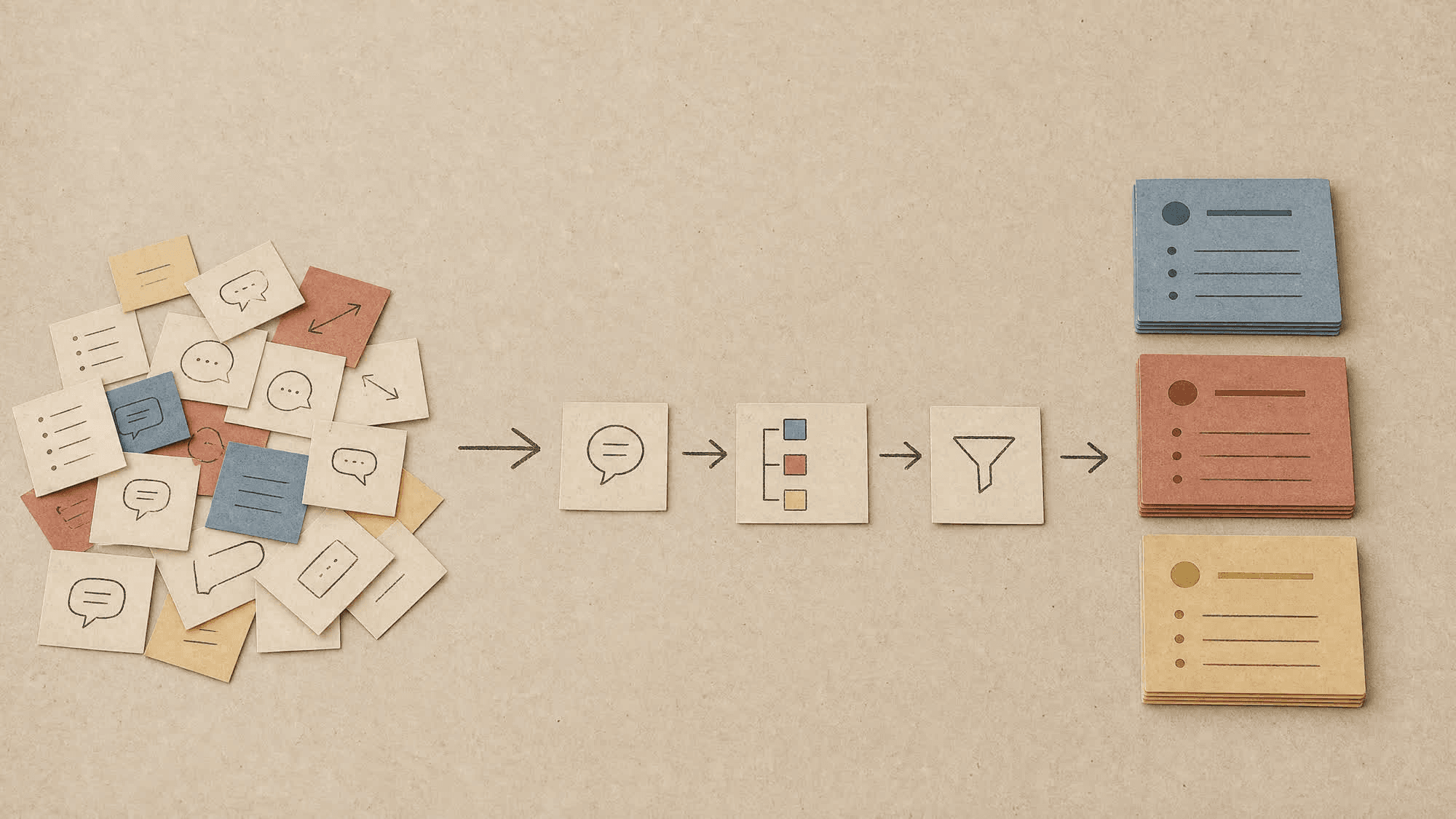
Most creators guess, then post, then hope. This system does three things instead: it borrows structure from people already winning, it removes the gap between what you think your page says and what it actually says, and it makes every week's decisions come from last week's evidence.
The exact prompts, audit checklist, and weekly review template behind going from $170k a year to $170k in a single month.
This is the whole system. Three prompts, one checklist, one Sunday ritual. Copy it, paste it, run it.
How to use this
Part 1: The Competitor Teardown. Reverse-engineers how top creators win, not what they talk about. Run it once, then refresh quarterly.
Part 2: The Roast Audit. Audits your profile, posts, bio and links like a cold viewer would. Run it once, then every 90 days.
Part 3: The Sunday Review. Turns last week's data into next week's content plan. Every Sunday, 30 minutes.
Rule for all three: if the output could apply to any creator, it's useless. Make the AI cut it.
Part 1: The Competitor Teardown Prompt
I run this in Perplexity Comet or Computer. You can also use Claude Cowork, OpenAI Work, or whichever AI tool you are most comfortable with. Feed it 8 to 10 links to top-performing posts from creators in your niche. Not their profiles. Their specific posts that popped.
Act as a senior content strategist. I'll give you 10 top creators in my niche. Ignore the topics, reverse-engineer how they win.

My niche: [e.g. helping ambitious women use AI to build skills, income and freedom]
My format: [Reels / carousels / both]
My audience: [e.g. women 25-40, corporate or self-employed, AI-curious but overwhelmed]

For each post, break down:
1. Hook pattern (number, contrarian, curiosity, identity, receipt/proof)
2. Pacing: where it speeds up and where it slows down. Mark the exact line
3. What triggers a comment, a save, and a send. Separately, they're different mechanics
4. How it moves a cold viewer toward a follow or a click

Then give me:
- The 3 patterns that repeat across 6+ posts
- The 1 thing separating the top 3 from the rest
- A fill-in-the-blank template I can reuse
- 5 hook rewrites for my niche

Rule: no generic advice. If it applies to any creator, cut it. Quote the actual lines you're analysing so I can see your evidence.
The follow-up prompt (this is where the real value is)
Now build me a "structure bible" from that analysis. One page.

- My 5 highest-leverage hook formulas, with a filled-in example for my niche
- My standard pacing map: second 0-3, 3-7, 7-15, 15-30, close
- The 3 comment triggers I should rotate so my CTAs don't get stale
- The 3 things the top creators do that I currently don't, ranked by how fast I could implement them
Save the output. This becomes the skeleton for every hook, opening line and pacing choice you write from now on. Don't re-derive it every week.
Part 2: The Roast Audit
This is the one that hurt. Give the AI browser access to your profile and let it look at you the way a stranger does. Someone who has never heard of you and is deciding in 1.8 seconds whether to follow.
Take over my browser and audit my profile at [your handle] as a brutally honest growth strategist.

Assume the viewer is a cold stranger who landed on my page from one Reel and has never heard of me. They will decide in under 2 seconds.

Audit, in this order:
1. Bio: Within 3 seconds, can they say out loud who I help, what I help them get, and how? Quote my bio back to me and tell me what a stranger would actually conclude.
2. Name field + handle: Am I wasting searchable keywords?
3. Profile photo + highlights: Do these support the promise or contradict it?
4. Top 9 grid: What single promise do these 9 posts communicate together? If it's more than one promise, tell me. That's the problem.
5. Link in bio: How many clicks to the thing I actually want people to buy or join? Where do people drop off?
6. Last 30 posts: Tag each one against my stated promise. On-promise / Adjacent / Off-promise. Give me the percentage split.
7. Pinned posts: Are these my best converters or just my highest views? Not the same thing.

Then deliver:
- The one sentence a stranger would use to describe me, based only on what they can see
- The gap between that sentence and my actual promise: [your promise]
- The 5 fixes ranked by impact on follower conversion, with the exact copy rewritten for me
- What to delete, archive or unpin today

Rules: no compliments. Do not soften anything. Be specific, quote my own words, and tell me what a stranger would misunderstand.
The Audit Checklist
Score each line Yes / Almost / No. Anything not a clean Yes is this week's task.
Clarity (the follow decision)
- My bio names a specific person, not "everyone"
- My bio names a specific outcome, not a vibe
- My bio names the mechanism (the how)
- The name field contains the keywords people actually search
- A stranger can describe my page in one sentence, and it matches my promise
- My top 9 posts communicate ONE promise, not three
Proof (the trust decision)
- There is visible evidence I can do what I claim (numbers, results, receipts, student wins)
- At least one pinned post is a proof post, not just a viral post
- Highlights include: who I am, what I offer, and social proof
- Testimonials or student results are visible without scrolling into the feed
Conversion (the click decision)
- One primary CTA per post, not three competing ones
- Link in bio reaches the money in 2 clicks or fewer
- Every offer has a named next step (comment word, DM keyword, link)
- The comment keyword is short, memorable, and typed the same way every time
- Email or community capture happens before the sale, not instead of it
Consistency (the algorithm decision)
- 70% or more of my last 30 posts are on-promise
- I have 3 to 5 repeatable content pillars, not infinite topics
- My posting cadence has been stable for 30+ days
- My hooks use my structure bible, not whatever I felt like that morning
Business (the F-you money decision)
- Content maps to a specific revenue line: brand deals, speaking, students, product
- I know my top 3 posts by conversion, not by views
- I know which pillar brings in buyers vs which pillar just brings reach
- There is a paid offer visible somewhere on the page today
Part 3: The Sunday Review
Thirty minutes, every Sunday. This is the compounding part. Views are vanity. The signal lives in saves, sends and the actual language in your comments.
Step 1: Pull the numbers
Act as my content analyst. Here is last week's data: [paste or attach your insights export / screenshots]

For each post, record: hook type, pillar, format, length, views, reach, saves, shares/sends, comments, follows from that post, profile visits, link clicks.

Then calculate and rank by:
- Save rate (saves / reach)
- Send rate (sends / reach)
- Follow rate (follows / reach)
- Comment-to-view ratio

Ignore raw views entirely in your ranking. Tell me which post won on each metric and why they're different posts.
Step 2: Read the comments properly
Now analyse every comment from last week as qualitative research, not as feedback. Cluster them into:

1. Questions: what people don't understand yet (these are next week's posts)
2. Objections: what stops them buying or starting
3. Self-identification: how they describe themselves in their own words
4. Requests: what they're explicitly asking me to make

Give me the exact phrasing people use most often. I want their language, not mine.

Then: the top 3 questions asked more than once, and the one objection I've never addressed publicly.
Step 3: Turn it into next week's plan
Based on the performance data and the comment analysis, build next week's content plan.

Constraints: [X] posts, formats [Reels/carousels], pillars [list yours], promise [your promise].

For each post give me:
- Pillar and objective (reach / trust / conversion)
- The hook, written out, using a formula from my structure bible
- Which comment or metric from last week justifies this post
- The pacing map
- The CTA and which revenue line it serves

Then:
- 1 post that repurposes last week's top save-rate post in a new format
- 1 post that directly answers the top repeated question
- 1 post that kills the objection I've never addressed
- The pattern I'd have missed: what does this week's data say about my audience that I probably can't see myself?
The Weekly Review Template
Copy this into Notion. Fill it every Sunday. After 8 weeks you'll have a pattern library nobody can take from you.
Week of: ______
For each post, track: Pillar, Hook type, Reach, Save %, Send %, Follows, Link clicks.
Winners
- Highest save rate: ______ . Why:
- Highest send rate: ______ . Why:
- Highest follow rate: ______ . Why:
- Highest link clicks: ______ . Why:
Losers
- Lowest performer: ______ . Hypothesis for why: Was it the hook, the pacing, the topic, or the CTA?
Audience language bank (their words, copy verbatim)
Top 3 repeated questions
1.
2.
3.
Unaddressed objection
Decisions for next week
- Do more of:
- Stop doing:
- Test once:
Revenue note
- Inbound this week (brand, speaking, students, product):
- Which post most likely caused it:
The 90-Day Cadence
Every Sunday: Run Part 3. Fill the template. Plan the week.
Every 30 days: Check the on-promise percentage of your last 30 posts. Under 70%, you're drifting.
Every 90 days: Re-run the Part 2 Roast Audit and refresh the Part 1 teardown with new top posts.
Why This Works
Most creators guess, then post, then hope. This system does three things instead: it borrows structure from people already winning, it removes the gap between what you think your page says and what it actually says, and it makes every week's decisions come from last week's evidence.
You are not supposed to be good at spotting patterns in your own data. That is what the machine is for. Your job is the taste, the story and the delivery.
Content is the top of the funnel. Everything (brand deals, speaking, students, product) comes from making the top of that funnel unmistakably clear about who you help and what they get.